
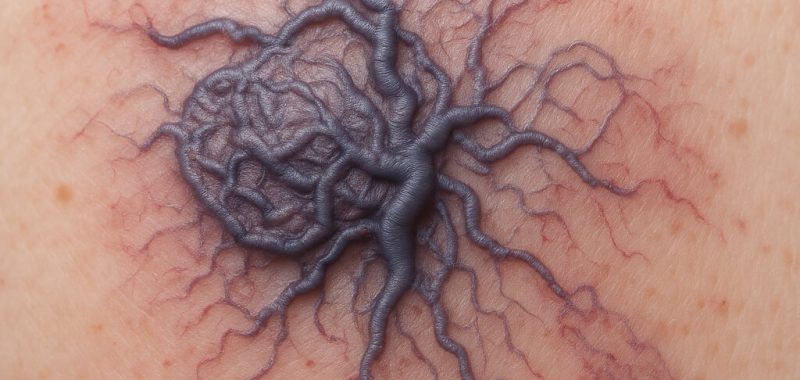
What are congenital vascular anomalies / vascular malformations?
Vascular malformations are a group of abnormal arterial or venous tangles present from birth. |
Vascular malformations can include high-flow arteries and veins or slower-flow veins and lymphatic vessels. |
They can be found in any part or organ of the body. |
Malformations may appear as a tangle connecting arteries and veins or as a mass of many vessels in any of these vessels. |
Therefore, they can be arterio-venous malformations (AVM) involving both arteries and veins, widespread venous malformations resembling varicose veins, or cavernous angiomas in the form of fine capillary tangles. |
Most are present at birth. Some disappear before school age, while others become more apparent with age. |
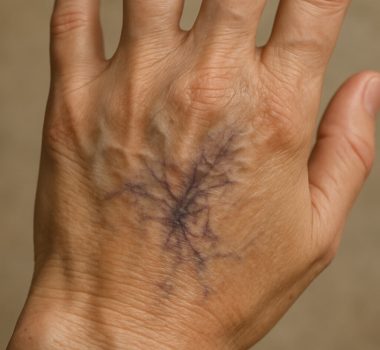
Symptoms and Risk Factors
Symptoms depend on the organ and type of the malformation. Sometimes, they cause no symptoms or complaints at all. The main complaints are:
• Pain
• Bleeding
Risk factors are unknown, but they may be related to hormones. For example, malformations tend to grow more rapidly during puberty, pregnancy, and with the use of birth control pills.
Communication
About Us
Frequently Asked Questions
Vascular malformation is a congenital condition in which blood vessels develop abnormally in structure. It can affect arteries, veins, or lymphatic vessels. It may occur in any part of the body and is usually present at birth.
Symptoms vary depending on the location of the malformation. Common symptoms include pain, bleeding, cosmetic deformities, and impaired function of the affected organ (such as seizures in the brain). In some cases, there may be no symptoms at all.
Diagnosis varies depending on the location of the malformation. Techniques such as magnetic resonance imaging (MRI), computed tomography (CT), ultrasound, and angiography can be used to determine the location, size, and vascular connections of the malformation.
Treatment varies depending on the type of malformation and the affected organ. Some malformations are only monitored. When necessary, laser therapy, sclerotherapy, embolization, or surgical methods may be used.
The exact cause is unknown and they are mostly not hereditary. However, hormone-related conditions such as puberty, pregnancy, and the use of birth control pills can accelerate their growth.